










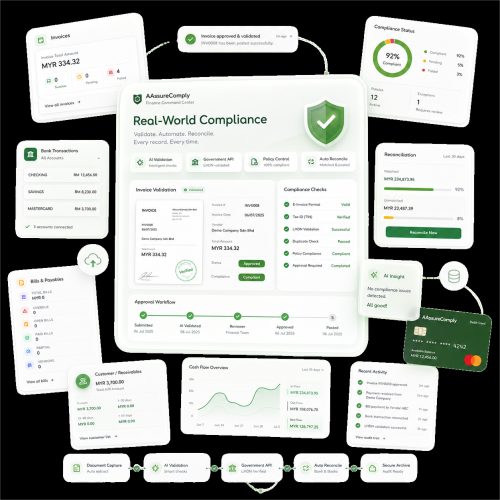

Simple Plans For Growing Compliance Needs
Start with core compliance workflows and scale into e-invoicing, governance, trust accounting and multi-entity controls.
Helping businesses manage accounting compliance, e-invoicing, governance, ERP integration and regulatory workflows across multiple markets.
Built for SMEs, CFOs, accounting firms, law firms and multi-entity finance teams.
Every country has different e-invoicing, digital tax and accounting compliance requirements. AassureComply helps teams manage each market through one platform.
MyInvois compliance for buyer-requested, consolidated, self-billed and cross-border e-Invoice workflows.
PEPPOL-native compliance for regulated Belgian business operations.
InvoiceNow and PEPPOL workflows for GST-ready finance teams and accounting firms.
FTA e-invoicing readiness with VAT-aware workflows and ERP connectivity.
PEPPOL e-invoicing support for businesses moving beyond basic bookkeeping tools.
BIR digital tax readiness for SMEs moving away from manual invoicing.
Cross-border PEPPOL workflows for ANZ finance and compliance teams.
FIRS compliance preparation for emerging digital tax and e-invoicing requirements.
XRechnung and GDPR-aligned workflows for structured invoice compliance.


Finance teams now manage invoice validation, tax rules, buyer data, supplier workflows, self-billed invoices, employee claims, cross-border transactions, approvals, audit trails and country-specific reporting.
That work breaks when it sits across spreadsheets, portals, email approvals, disconnected accounting tools and separate ERP systems.
AassureComply brings those workflows into one compliance operating system, so finance teams can move from manual checks to controlled, audit-ready operations.
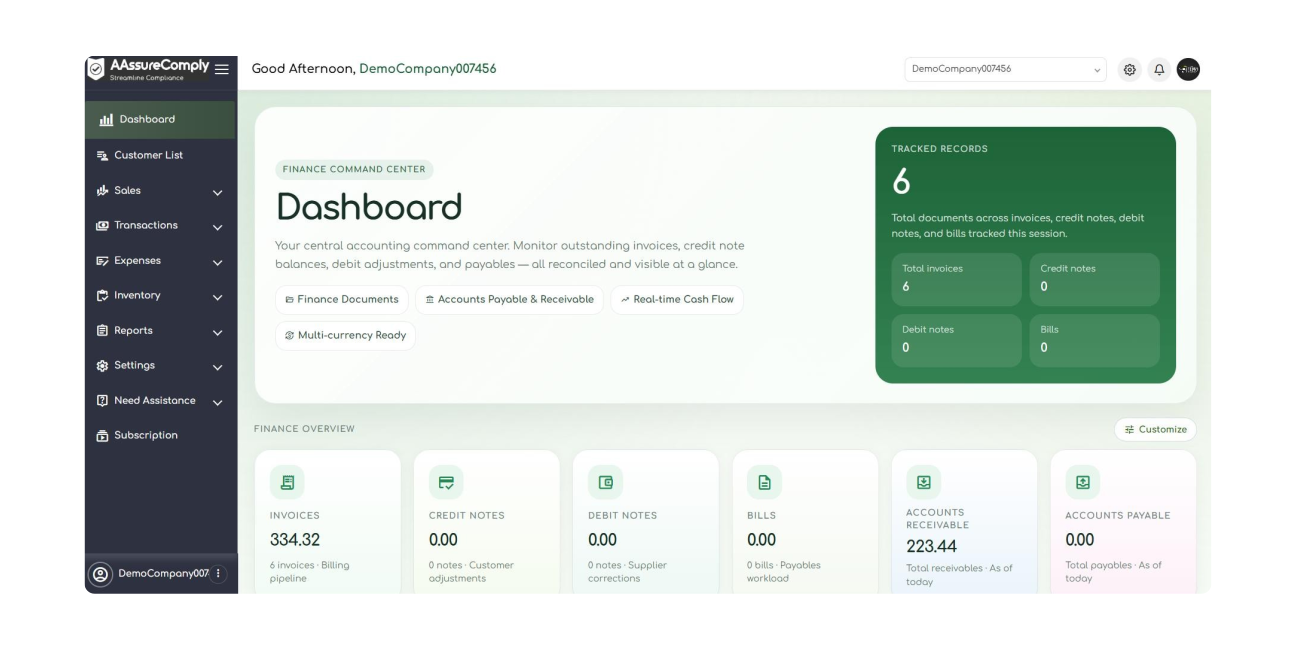
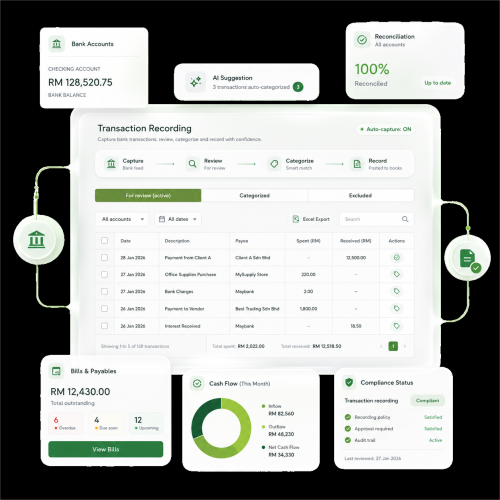
AassureComply connects the core finance workflows that regulated businesses need to operate with control.
Manage invoices, ledgers, reconciliations and financial records with audit-ready structure.
Send, receive, validate and track structured e-Invoices across supported networks.
Apply local rules, validation checks and exception workflows before problems escalate.
Control approvals, roles, entities, branches, access and compliance evidence.
Detect missing data, flag risk signals and guide teams through complex workflows.
AassureComply helps turn complex invoice scenarios into structured, traceable and auditable workflows.
Buyer-requested e-Invoices with required buyer details captured correctly.
Consolidated e-Invoices for eligible transactions and monthly submissions.
Cross-border transactions involving foreign suppliers and imported services.
e-Commerce workflows involving buyers, sellers and platform responsibilities.
Employee claims where supporting documents need finance review.
Self-billed e-Invoices for suppliers, rentals, agents and distributors.
One company becomes a group. One branch becomes a network. One market becomes regional operations. Suddenly, finance teams manage different tax treatments, invoice formats, approval rules, client funds and reporting obligations.
Manage subsidiaries, branches, warehouses, countries and compliance workflows from one connected platform.
Track approvals, user access, entity-level activity and compliance evidence across the business.

Support client fund segregation, matter billing, audit-ready trust records and compliance visibility.
See readiness gaps, failed validations, pending workflows and operational risk across entities.
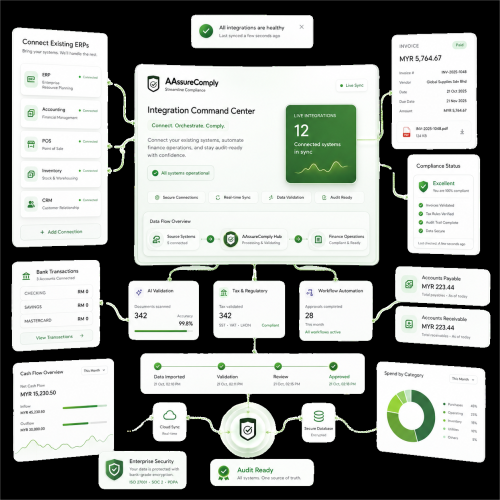
AassureComply is designed to work with the systems your finance team already uses.
Connect invoice, tax, buyer, supplier and entity data from ERP, accounting, POS and custom systems into one compliance workflow.
Start with core compliance workflows and scale into e-invoicing, governance, trust accounting and multi-entity controls.
AassureComply is global e-invoicing software and a compliance automation platform for finance teams managing electronic invoicing, accounting workflows, tax controls, ERP integration and regulatory requirements. It connects finance and compliance processes in one environment so businesses can reduce fragmented workflows, improve visibility and manage compliance across multiple entities and markets.
No. AassureComply supports electronic invoicing, but it also covers accounting compliance, tax management, finance governance, reporting, audit trails, role-based controls and multi-company operations. The platform is designed for businesses that need to manage e-invoicing as part of a broader finance and regulatory compliance workflow.
AassureComply supports e-invoicing and compliance workflows across multiple markets, including Malaysia, Singapore, Australia, New Zealand, Germany, Belgium, the UAE, the Philippines and Nigeria. Each market can have different invoice formats, tax rules and regulatory requirements, so businesses should use the relevant country workflow for their compliance needs.
Yes. AassureComply supports ERP integration and API-based e-invoicing workflows that connect invoice, tax, buyer, supplier and entity data with existing finance systems. This allows businesses to add compliance and electronic invoicing capabilities around their current ERP or accounting environment without rebuilding the entire finance technology stack.
Yes. AassureComply supports PEPPOL-related e-invoicing capabilities, including Access Point connectivity, API integration and participant discovery workflows. These capabilities can help organisations exchange structured electronic invoices through PEPPOL-enabled networks while connecting invoice exchange with existing finance systems and applicable country compliance processes.
Yes. AassureComply supports businesses managing multiple companies, subsidiaries, branches and legal entities. Finance teams can maintain entity-level workflows, permissions, approvals and compliance records while gaining central visibility across the wider organisation, helping reduce fragmented finance processes across different entities, markets and operational structures.
AassureComply helps automate finance compliance by connecting invoice validation, tax controls, approvals, accounting workflows, reporting and audit records within one platform. Instead of managing these processes through separate systems and spreadsheets, finance teams can create more consistent workflows and improve visibility across compliance activities.