


- S3/520 Collins St, #1191, Melb. VIC 3000, Australia
- info@aassurecomply.com
- +61 (03) 8488 7406
Credit Notes, Debit Notes and Refund Notes Keep Invoice Adjustments Clear
Manage credit notes, debit notes and refund notes with approvals, linked invoices and clear finance records.
Trusted Compliance Coverage
- PEPPOL Network Connectivity
- Multi-Country Coverage
- ERP Integration
- Audit Trail Enabled
- Onboarding Support
Controls For Post-Invoice Adjustments
AassureComply gives sales and finance teams a structured way to manage invoice corrections after billing.
Credit Notes
Issue customer credits for returns, overbilling, discounts, cancellations or invoice corrections.
Debit Notes
Create debit notes when additional charges, corrections or adjustments need to be recorded.
Refund Tracking
Track refund requests, approvals, payment status and customer communication.
Invoice Linkage
Connect every adjustment to the original invoice, customer and transaction record.
Audit History
Keep adjustment notes, user actions, approvals and supporting evidence attached to records.
Built For Teams Managing Sales Corrections
AassureComply helps every team involved in invoice adjustments work from the same record.
Other PEPPOL Markets
Add supported countries after coverage is verified by product and compliance teams.
Country Coverage Areas
For SMEs
Move away from manual refund notes and scattered adjustment spreadsheets.
For Sales Teams
Handle customer corrections without losing track of the original deal context.
For Finance Teams
Keep credit notes, debit notes and refunds aligned with accounting records.
For Operations Teams
Record returns, cancellations and fulfilment-related changes more clearly.
For Managers
Review high-value refunds, unusual corrections and approval history before completion.
From Adjustment Request To Final Record
AassureComply helps teams choose the right adjustment, record supporting details, complete reviews and maintain a clear history of every post-invoice change.
B2G Use Cases
Step 1: Select The Original Invoice
Start from the invoice, payment or customer transaction that needs correction.
Step 2: Choose Adjustment Type
Create a credit note, debit note or refund request based on the business case.
Step 3: Add Reason And Evidence
Capture the reason, amount, tax treatment, notes and supporting documents.
Step 4: Route For Approval
Send the adjustment to finance, sales or management for review when needed.
Step 5: Complete And Record
Finalize the note or refund with history, accounting impact and audit trail preserved.
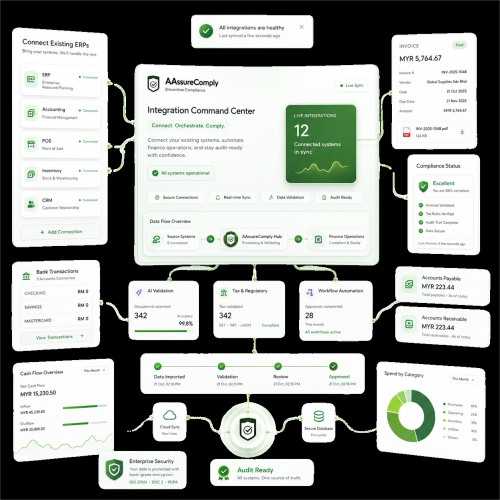
Connect Adjustments With Sales And Accounting
Connected Workflow Areas
- Customer invoices
- Sales orders
- Payment records
- Product returns
- Refund approvals
- Tax adjustments
- Customer account balances
Integration Areas








Plans That Keep Every Adjustment Traceable
Start with credit, debit and refund note control, then scale into approval routing, invoice linkage, tax adjustments, payment updates and audit-ready correction records.
Frequently Asked Questions
What is a credit note and debit note?
A credit note and debit note are documents used to record adjustments to an existing transaction. A credit note generally reduces an amount associated with an invoice, while a debit note records an additional amount or adjustment depending on the transaction and accounting workflow.
What is the difference between a credit note and a debit note?
A credit note usually reduces the value of an original invoice, while a debit note generally records an increase or another debit-side adjustment. The exact treatment depends on the transaction, accounting rules and applicable tax requirements.
When should a credit note or debit note be issued?
A credit note or debit note may be issued when an invoice requires a documented adjustment, such as a pricing correction, return, discount, quantity change or other approved amendment. The adjustment should remain linked to the original invoice for clear financial records.
Is a credit note the same as an invoice?
No. An invoice records an amount charged for goods or services, while a credit note adjusts or reduces an amount already invoiced. Credit notes should normally reference the related invoice so the original transaction and subsequent adjustment remain traceable.
What is an invoice adjustment?
An invoice adjustment is a documented change to an existing invoice or transaction record. It may involve a credit note, debit note, refund or other correction. A controlled workflow helps businesses preserve the original invoice while recording the reason, value and approval history of the adjustment.
Can AassureComply link credit notes and debit notes to original invoices?
Yes. AassureComply can connect credit notes, debit notes and related adjustments with the original invoice and customer record. This helps finance teams track the reason for each change, maintain approval history and preserve an audit trail.