

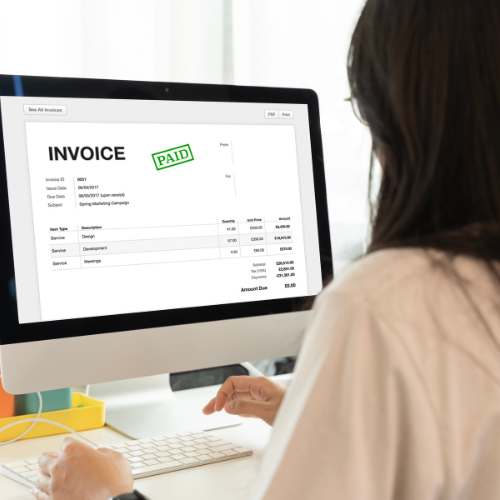
Australian companies simply cannot afford to overlook digital transformation any longer. The time has come when it is not only desirable but absolutely essential. Send Peppol invoices in Australia processing of invoices is not considered an easy task in the back office any longer but plays an important role in areas such as compliance and cash flow management.
Since the government is encouraging electronic invoices in Australia using the Peppol system, even SMEs are now thinking differently about sending and receiving invoices. This Guide to eInvoicing in Australia explains what Peppol is, how it works, and why now is the right time to modernize invoicing processes and Send Peppol Invoice in Australia securely.
Understanding the Shift to Digital Invoicing
For quite a number of years, Australian companies used paper-based invoices sent through email as PDFs. This may sound familiar, but it is a slow process that has a great possibility of mistakes.
It is here that national eInvoicing systems come into their own. Rather than having unstructured documents, eInvoices are transmitted in a structured format between systems. This eliminates re-keying, reduces disputes, and speeds up payments, especially when organisations Send Peppol Invoice Australia using a standardised network.
The Australian Taxation Office chose Peppol as a framework in Australia in order to facilitate interoperability in accounting systems to allow invoices to be sent reliably between businesses.
What Is Peppol and Why It Matters
Peppol (Pan-European Public Procurement Online) is a global network that enables secure electronic document exchange. In Australia, it supports national digital transformation efforts and underpins E-Invoicing Australia by providing a consistent technical framework.
Once connected, businesses can Send an eInvoice in Australia to any Peppol-enabled organisation, regardless of the software used. This interoperability is one of the key advantages of Peppol e-invoicing Australia, making it highly attractive for government agencies and large enterprises.
How Peppol e-Invoicing Works in Australia
On a high level, the process is as follows:
- The supplier generates an account statement or accounting entry into their ERP system.
- The invoice will then be transformed into a Peppol compliant format
- The buyer will receive the invoice directly into his system
This approach improves accuracy and security while reducing processing time. Peppol e-invoicing Australia standards align with Australian tax and business requirements, allowing organisations to Send Peppol Invoice Australia efficiently for both B2B and B2G transactions.
Benefits of eInvoicing for Australian Businesses
1. Faster Payments :
When businesses Send an eInvoice in Australia, invoices are delivered instantly, reducing approval delays and improving cash flow.
2. Lower Processing Costs :
Processing is costly and time-consuming manually. The overheads are greatly reduced with automation.
3. Less Error & Dispute :
This structured bill data eliminates typical billing problems like errors in billings, missing billing information, or repeated billings.
4. Enhanced Security :
Invoices are exchanged in a controlled environment, reducing fraud risks commonly associated with emailed PDFs and supporting Peppol e-invoicing Australia security standards.
5. Environmental Benefits :
Electronic invoicing assists with sustainability by cutting both paper and postage costs.
Who Should Adopt Peppol eInvoicing?
While government agencies were early adopters, Peppol eInvoicing is beneficial for organizations of all sizes. SMEs gain faster payments and reduced administrative effort, while larger enterprises benefit from scalability and standardization when they Send Peppol Invoice Australia.
This Guide to eInvoicing in Australia is especially useful for finance managers, CFOs, and business owners looking to future-proof their operations.
Compliance and Regulatory Landscape
The Australian Government actively promotes E-Invoicing Australia as part of its digital economy strategy. Although not mandatory for all private businesses, government agencies must be Peppol-enabled to receive invoices.
Early adoption allows businesses to stay ahead of future mandates while improving efficiency today. Organizations that Send an eInvoice in Australia through Peppol also gain confidence when they Send Peppol Invoice Australia to public sector buyers.
Common Use Cases Across Industries
- Professional Services: Faster billing and improved cash flow
- Retail & Wholesale: High-volume invoice automation
- Manufacturing: Seamless ERP integration
- Technology & SaaS: Scalable invoicing for growing customer bases
Across industries, adoption continues to increase as more organisations choose to Send Peppol Invoice Australia for operational consistency.
Choosing the Right eInvoicing Solution
When selecting an eInvoicing provider, businesses should consider:
- Peppol network connectivity
- Compatibility with existing accounting or ERP systems
- Adherence to Australian tax requirements
- Implementation support and reliability
The right solution ensures organisations can Send Peppol Invoice Australia without disrupting existing workflows.
Implementation: What to Expect
A typical implementation includes:
- Analyzing existing billing systems
- The use of the Peppol network via a certified supplier
- Testing Invoice Exchange with Selected Partners
- Rollout across customers and suppliers
With expert guidance, most businesses can go live quickly. This Guide to eInvoicing in Australia highlights the importance of preparation to successfully Send Peppol Invoice Australia.
Future of eInvoicing in Australia
Digital invoicing is rapidly becoming the norm. As adoption increases, organisations that delay risk inefficiencies and potential compliance gaps. E-Invoicing Australia initiatives will continue expanding, with deeper integrations and broader use cases beyond invoicing.
Early adopters are better positioned to operate efficiently and scale confidently.
Frequently Asked Questions (FAQs)
1. What is the difference between a PDF invoice and an eInvoice?
A PDF requires manual handling, while an eInvoice is structured data exchanged directly between systems.
2. Is Peppol mandatory in Australia?
It is mandatory for government agencies to receive invoices, while private businesses are encouraged to adopt it.
3. Can small businesses use Peppol eInvoicing?
Yes. SMEs benefit from reduced admin work and faster processing.
4. Is Peppol eInvoicing secure?
Yes. Peppol e-invoicing Australia uses verified participants and secure access points.
5. Do I need new software to use eInvoicing?
Not necessarily. Many accounting systems already support Peppol or can be enabled through a provider.
6. How long does implementation take?
With the right provider, businesses can typically go live within days or weeks.
Conclusion
Peppol eInvoicing has been making a new way for invoice transactions in Australia. The change enhances cash flow, increases security, cuts costs, and helps organisations face any forthcoming regulations. By following this Guide to eInvoicing in Australia, businesses can modernise invoicing processes with confidence. Learn more and get started today by visiting https://aassurecomply.com/ — your trusted partner for Peppol-enabled eInvoicing in Australia.